Vico Magistretti (1920–2006) is one of the most important Italian architects and industrial designers of the 20th century. His influence on Italian and international design is still felt today. Magistretti's works are internationally recognized and part of the permanent collections of renowned museums such as MoMA in New York.
Magistretti lived and worked primarily in Milan. In 1945, he completed his architecture studies at the Milan Polytechnic after attending courses at the Champ Universitaire Italien de Lausanne (Swiss university for Italian students) during World War II to escape the turmoil of war. Immediately afterwards, he joined his father's architectural firm. Magistretti received his first major recognition in 1948 when he won the Gran Premio at the 8th Triennale in Milan.
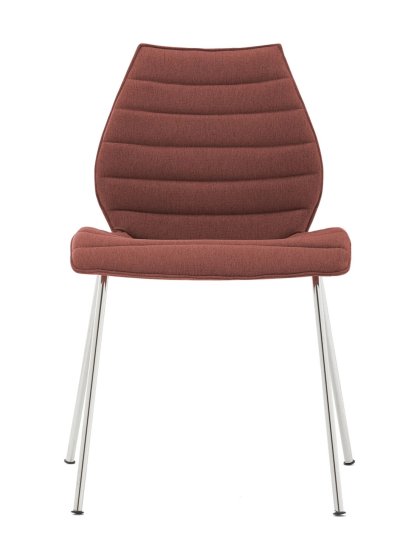
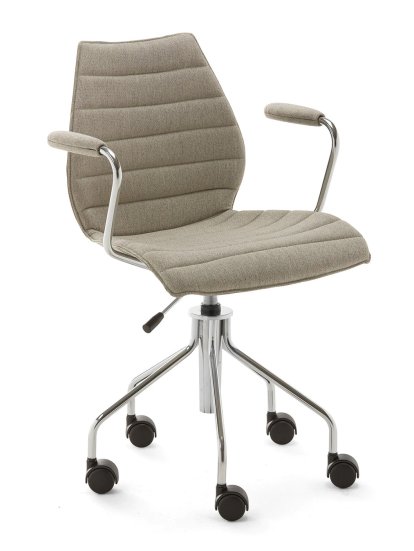
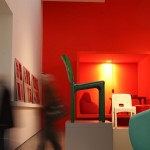
In the late 1950s and early 1960s, Magistretti turned his attention increasingly to furniture and product design. He designed furniture for Kartell and Artemide and developed, among other things, the Selene chair, an early example of a one-piece, injection-molded plastic chair that went into production in the late 1960s. In 1960, he began his long-standing collaboration with Cassina, where he designed, among other things, the Carimate chair (1959), the Maralunga sofa (1973), and the Nuvola Rossa modular bookcase (1977) — works that are still considered design classics today.
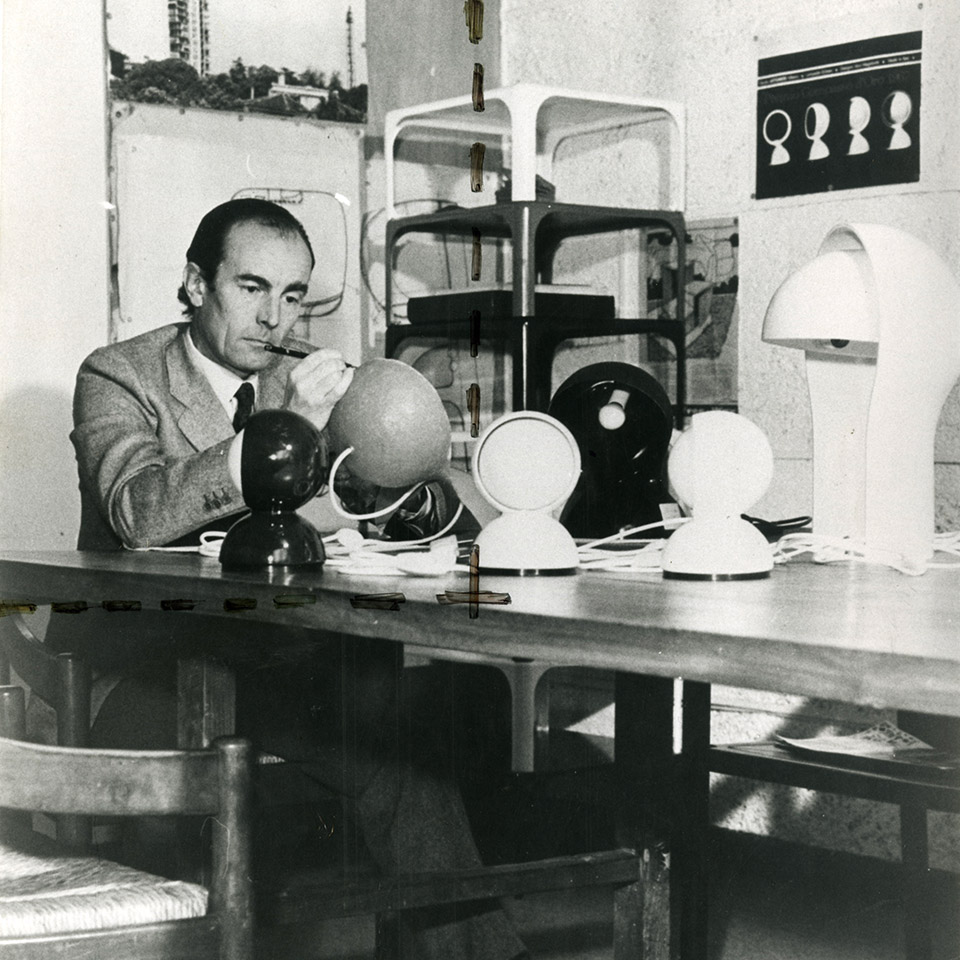
Another milestone in Magistretti's work is the Eclisse table lamp for Artemide, which was created around 1965 and went into production in 1967. It won the prestigious Compasso d'Oro award for its innovative, adjustable light regulator. The geometrically iconic Atollo lamp (1977) for Oluce, one of the most famous lighting designs of the 20th century, also won the Compasso d'Oro.
Parallel to his design career, Magistretti was an influential teacher: in the late 1970s and 1980s, he was a visiting professor at architecture and design schools around the world, including Milan, Paris, New York, and London, and was appointed Honorary Fellow of the Royal College of Art in 1983.
Magistretti's furniture and lighting combine technical innovation, precision craftsmanship, and aesthetic lightness. Magistretti continuously researched materials, spatial solutions, forms, and functions—always far removed from fashion trends—and left behind a body of work that continues to shape and inspire the world of design today.