The Design
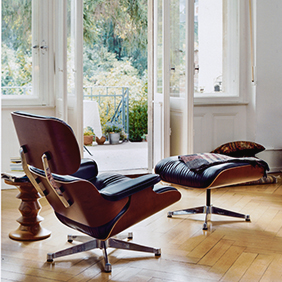
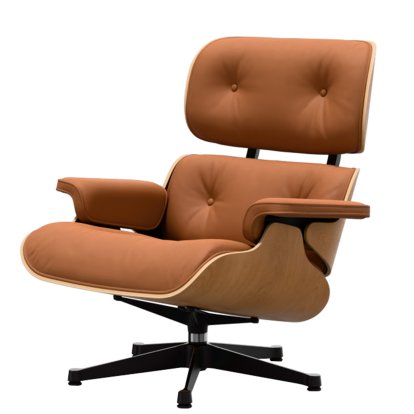
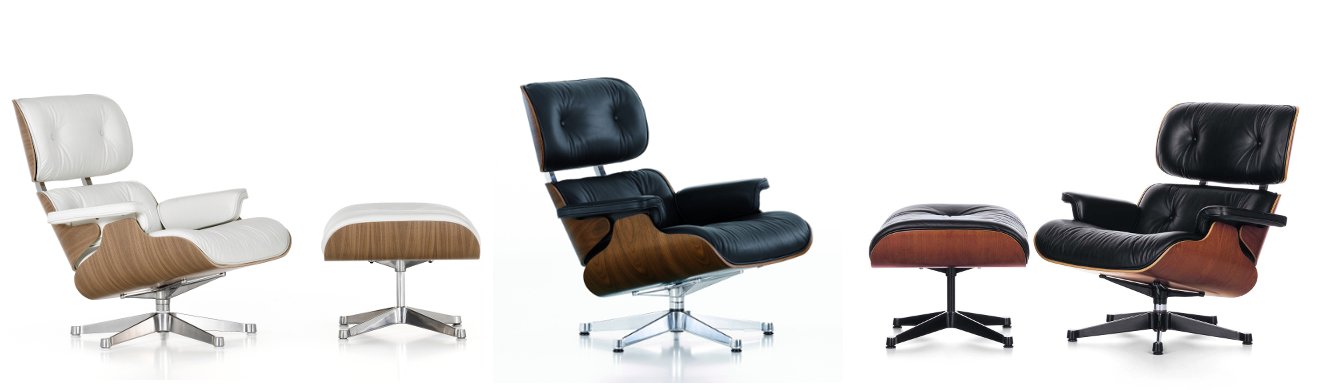
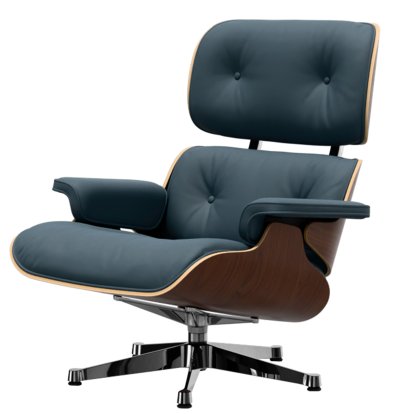
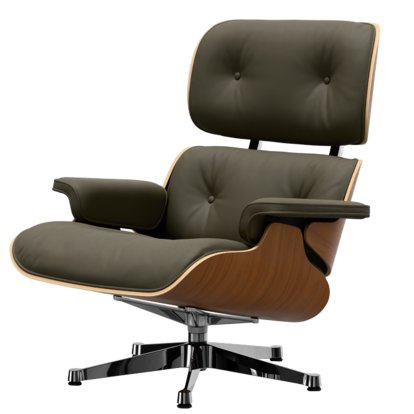
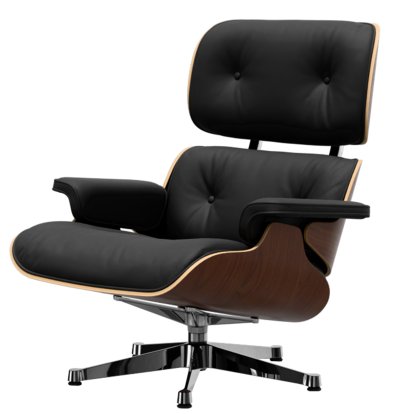
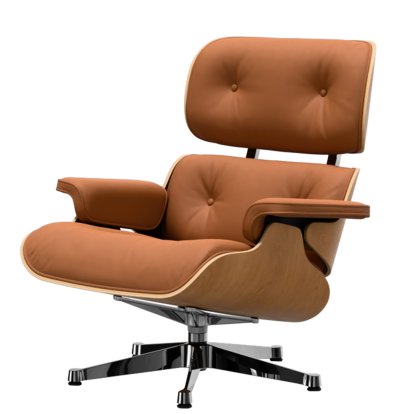
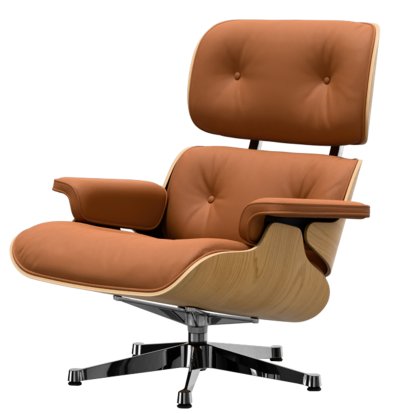
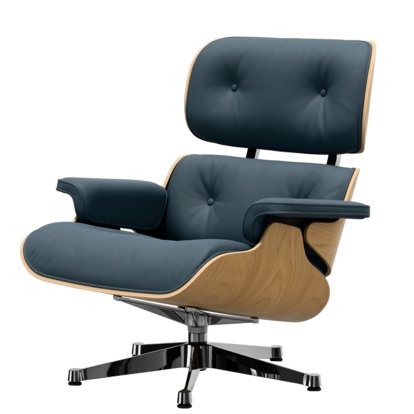
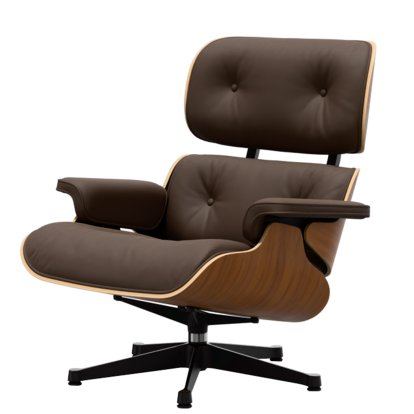
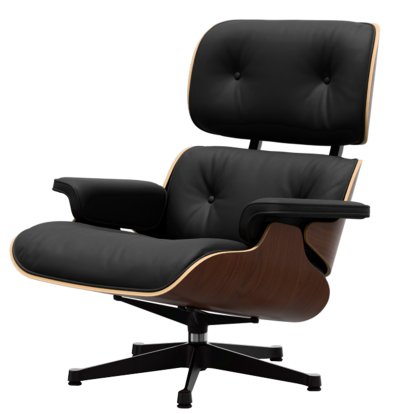
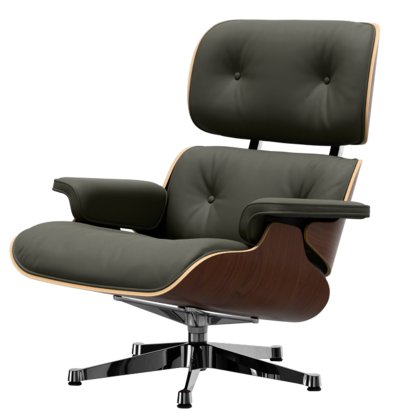
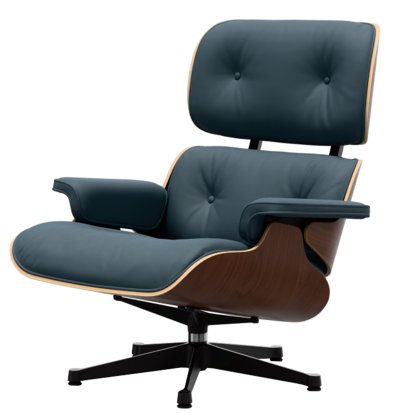
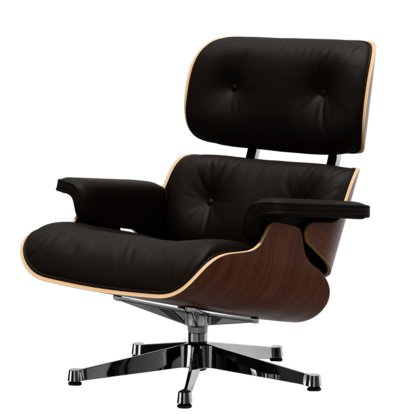
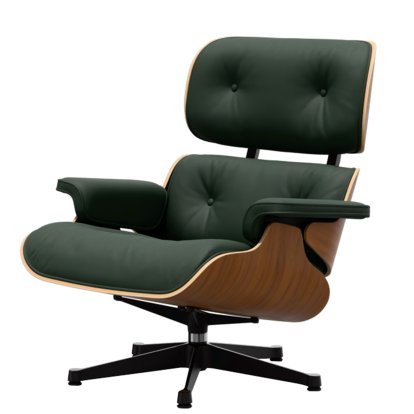
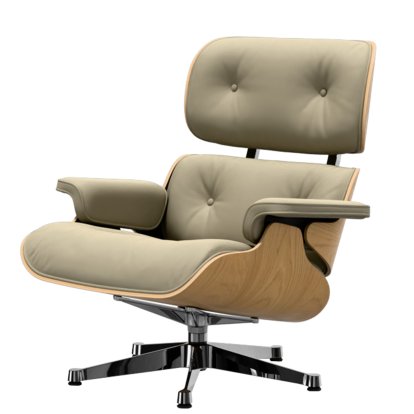
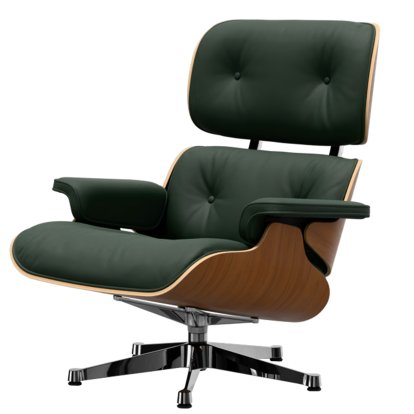
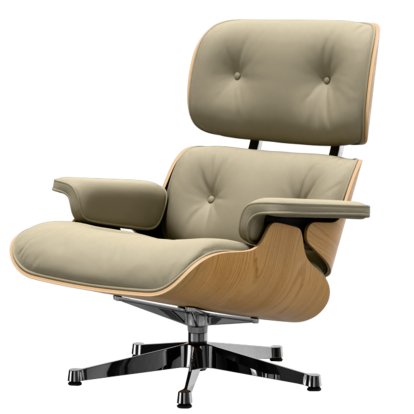
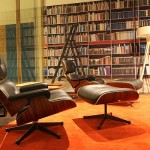
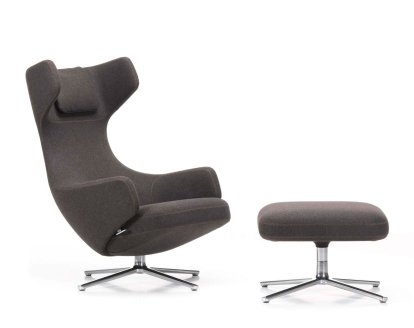
The history of the Eames Lounge Chair is generally told as being based upon film director Billy Wilder's desire for a modern, yet comfortable chair. Whether Wilder's furniture request alone was the originating impulse for the 1956 Lounge Chair, is questionable - although it is undisputed that he was the owner of the very first prototype. And regardless if truth or legend Billy Wilder's lasting connection with the Vitra Lounge chair was sealed in 1980 when he posed for the Vitra campaign "Personalities" in said piece of furniture. The Eames Lounge Chair is a stylish, sophisticated and contemporary modern interpretation of the classic club chair. With their design Charles and Ray Eames unite reduction and comfort - simple in design the object is a joy to sink into. Complementing the Vitra Eames Lounge Chair, also available as the Eames Lounge Chair white, is an Ottoman in the same leather-covered cushions on curved plywood shell design. Extraordinarily successful in its implementation, the design innovation of the Eames lounge chair was rightly awarded the Triennale Award in Milan and in 1960, just a few years after its launch, included in the design collection of the MoMA in New York.
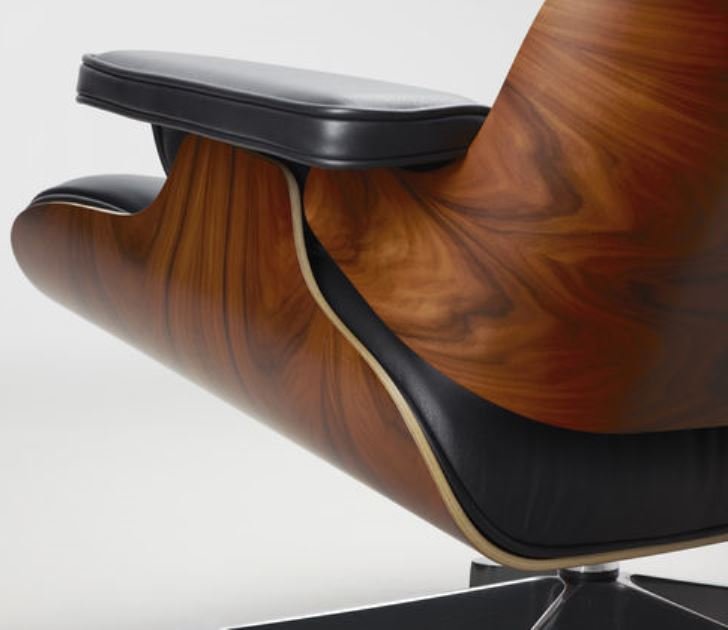
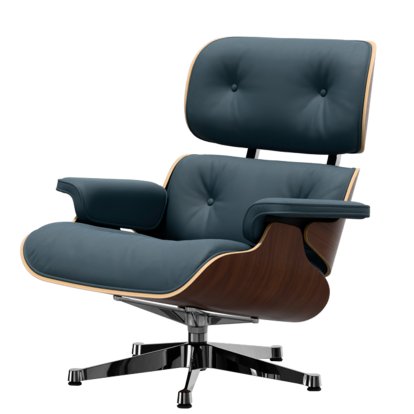
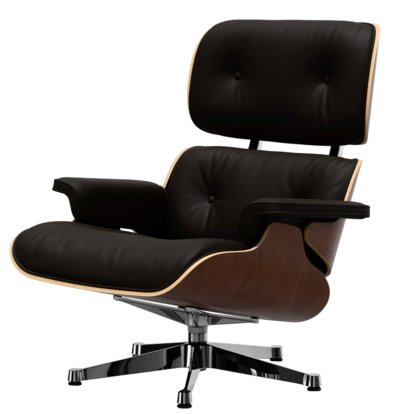
The noble Santos Palisander seat shell perfectly enhances this endearing classic.
Designer
Charles and Ray Eames are one of the most important design teams of the 20th century. Following their meeting in the early 1940s at the Cranbrook Academy of Art the two were to become united not only professionally, but also privately. Many of the pair's furniture designs were not only a commercial success, but also much loved aesthetic and artistic classics. The majority of the Eames's designs were realised in the Eames Studio in Los Angeles with the furniture designs initially being distributed through Herman Miller in the US and later by Vitra in Europe. However Charles and Ray Eames were not only active in the field of furniture but also worked extensively across architecture, film, photography, toys and textile design projects; by popular legend with Charles usually focused on technical aspects and Ray on the aesthetic.
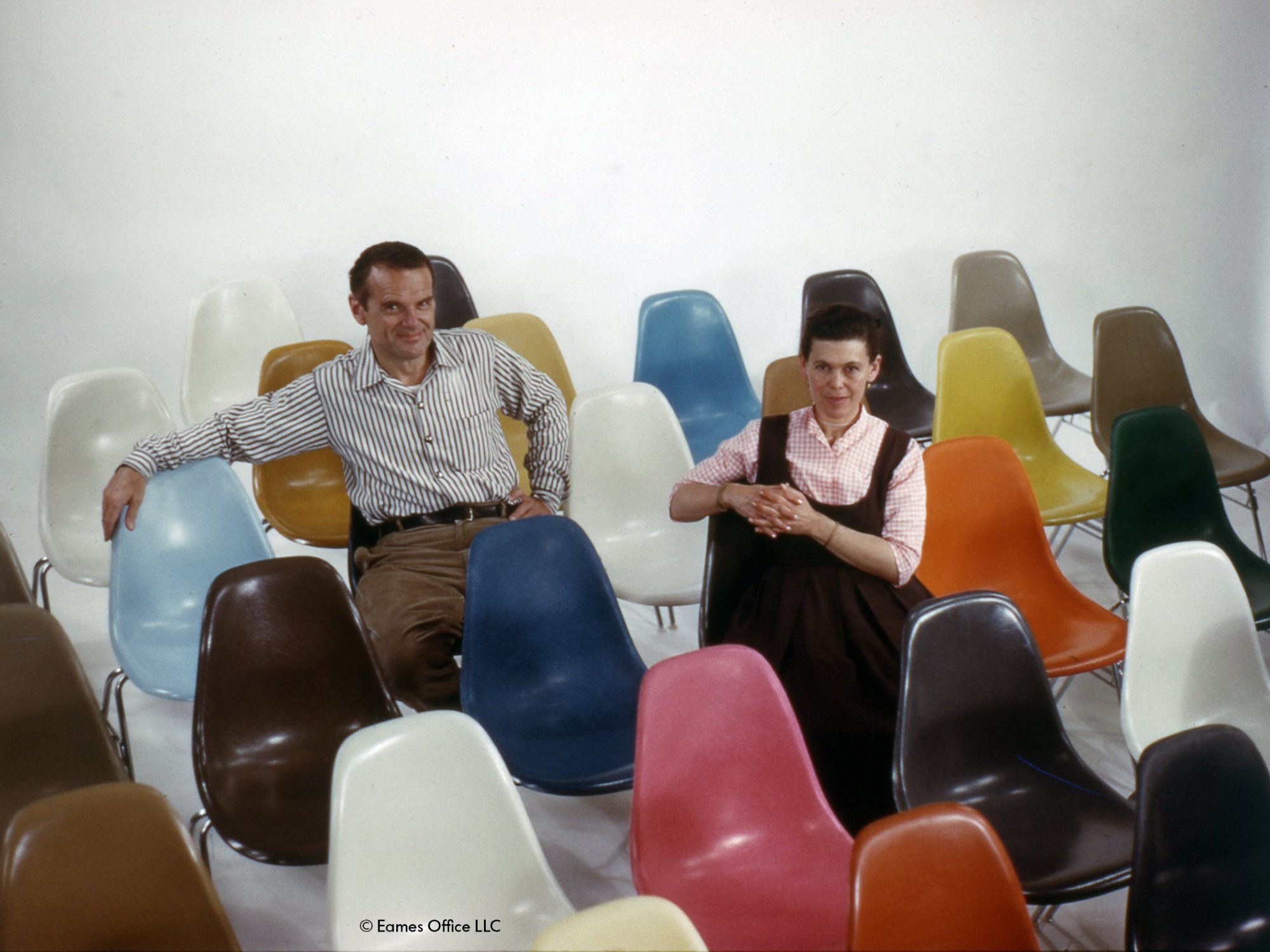
Charles and Ray Eames
Manufacturer
In Europe the name Eames is closely related with the Swiss furniture manufacturer Vitra. Company founder Willi Fehlbaum "discovered" the designer duo in the 1950s when by chance he came across an Eames Chair in New York. Excited about this product he secured the European license for the production and distribution of the Eames designs. Since then Vitra is the only authorized distributor in Europe and Asia of Eames furniture designs, including the Eames Lounge Chair & Ottoman. In addition to the professional relationship, a close friendship developed between the Eames and Fehlbaums, so much so that the Eames estate passed to Vitra following Ray Eames death. while to this day problems are approached via the question: "What would Charles and Ray do?" The reputation surrounding the name Vitra lives not only from the Eames design classics such as the Vitra Lounge Chair & Ottoman: in addition Vitra represents classic designs by the likes of Verner Panton, Alexander Girard and George Nelson and modern designs by, amongst others, Ronan & Erwan Bouroullec, Jasper Morrison and Maarten van Severen. The architecturally significant buildings of the Vitra Campus and the Vitra Design Museum meanwhile are important representatives of contemporary architecture, art and design. As with all Ray & Charles Eames furniture the Vitra Eames Lounge Chair & Ottoman produced in Europe and Asia and the 47, largely handcrafted, steps via which the Eames design classic is produced has remained virtually unchanged for the past 50 years. As manufacturer of Eames Lounge Chair & Ottoman Vitra offers its customers an exclusive insight into the manufacturing of this endearing design classic: in the Lounge Chair Atelier on the Vitra Campus visitors can experience the craftsmanship of the workshop staff which makes the Lounge Chair & Ottoman such a incomparable classic.
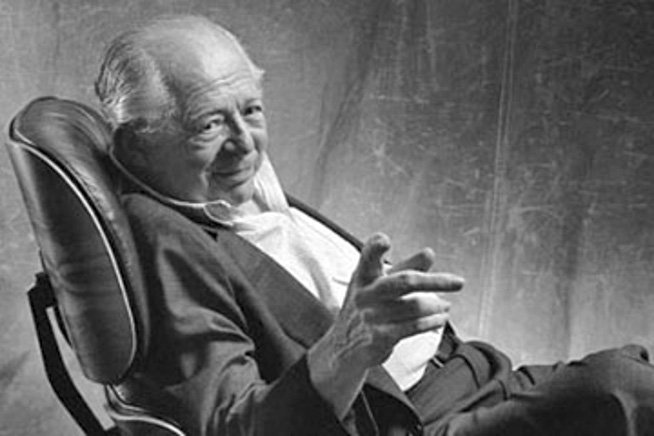
Billy Wilder on an Eames Lounge Chair
Production
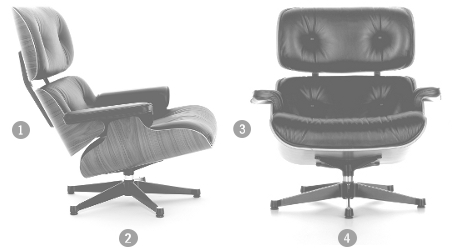
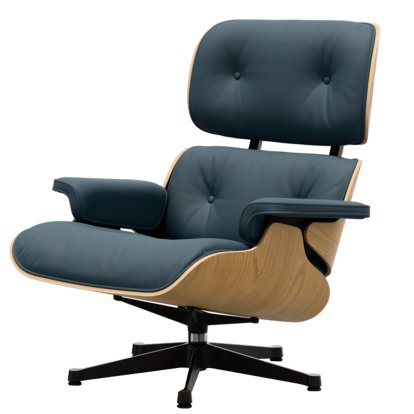
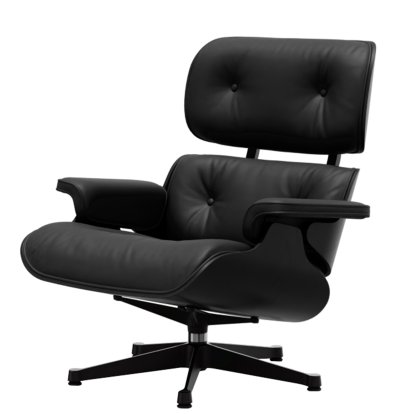
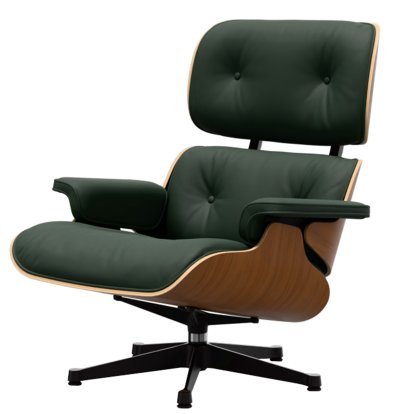
The Vitra Lounge Chair is constructed from several laminated wooden shells which form the seat, backrest and headrest. The chairs much vaunted comfort is guaranteed by the leather upholstery. The design is complemented by high-quality, leather upholstered armrests while the rotatable five star aluminium foot is optionally available as chrome or polished black. The Eames Ottoman is designed as a companion for Lounge Chair. Featuring a non-rotatable four star foot, just as with the Vitra Lounge Chair the Ottoman is available in various wood finishes and leathers. In addition the Eames Lounge Chair is available in the original 1967 height of 84 cm and a new seat height of 89 cm, an innovation which takes into account the increase in the average human height over the intervening decades.
The original material of the Eames Lounge Chair, Brazilian rosewood, has stood under an export ban since 1968; an increasingly tight species protection since 1998. Responding to this situation Vitra offers Eames Lounge Chair and Ottoman in the visually comparable Santos Palisander. In addition the Eames Lounge Chair is available in a white pigmented walnut version conceived by Hella Jongerius, a black pigmented walnut seat shell or a version in cherry. For the manufacture of the Lounge Chair and Ottoman Vitra take their environmental responsibility very seriously: not only do all veneers come from sustainably managed forests, but 24% of the materials used are recycled and 29% can be recycled. Not that such an option is likely to be taken up - a work such as the Charles and Ray Eames Lounge Chair not only being an exquisitely constructed and durable design, but one whose value increases over time - not least because of the individual patina that forms on the leather upholstery. "Sustainability" can be thus be found here in the classic sense of passing it on to the next generation.
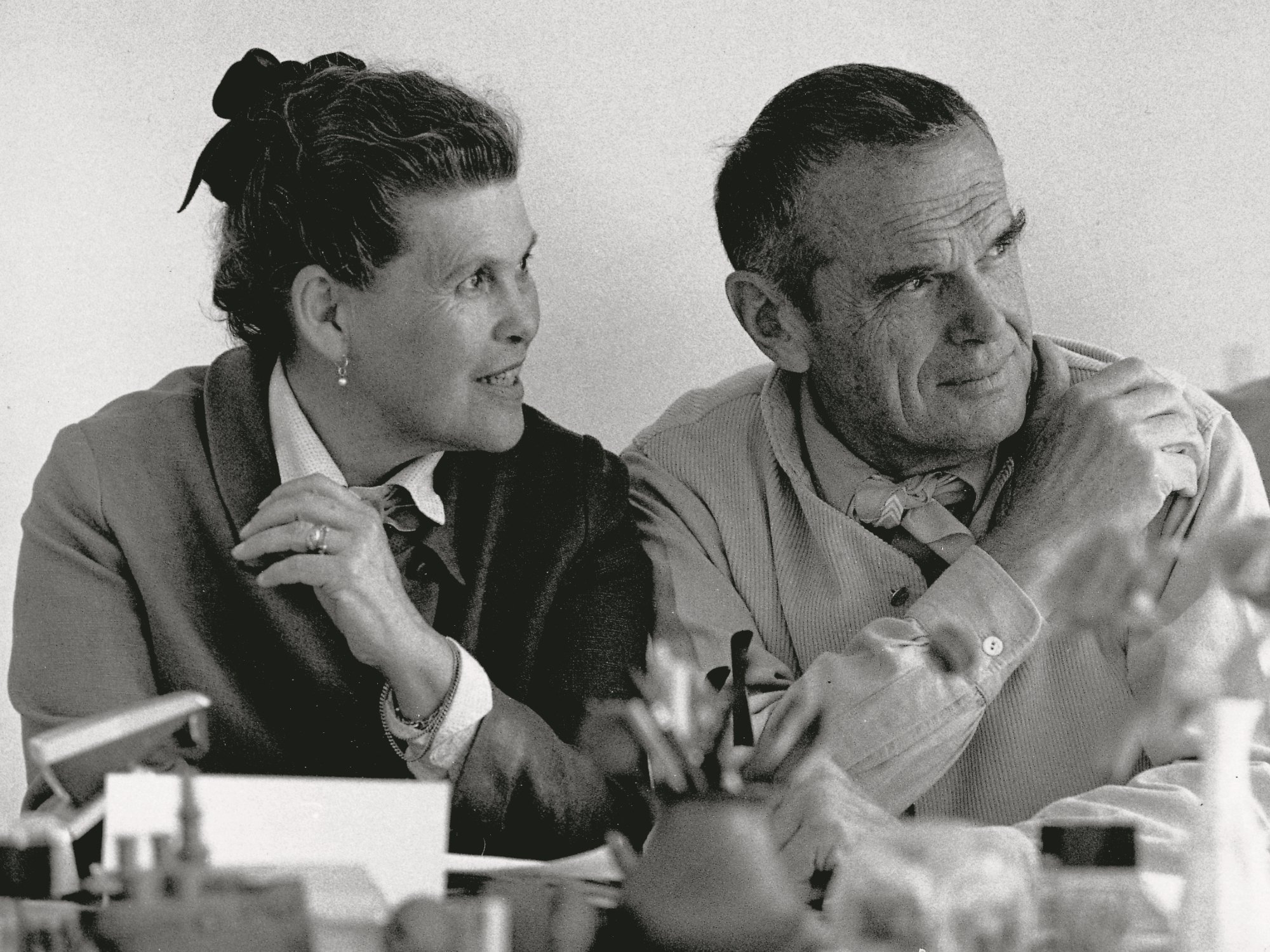
Ray and Charles Eames
Historical Context
In the form of the Eames Lounge Chair as a modern interpretation of the classic club chair one sees a culmination of the design ideals of the late 1950s. The artistic reorientation after World War re-explored the classical modernism, resulting in the so-called Gute Form in Germany and the ground-breaking Scandinavian design of the 1950s and 60s. Organic modernism, a movement closely related to the Finnish designer Alvar Aalto, combines the strict geometry of modernism with curved shapes. Eero Saarinen, alongside Arne Jacobsen a further important protagonist of this movement, worked in 1940 with Charles Eames at the Cranbrook Academy of Art on their joint entry for the New York Museum of Modern Art's "Organic Furniture Competition". In the evolving consumer society of the 1950s the home became ever more important as a well won retreat from the world of work; a development reflected in the comfortable elegance of the Eames Lounge Chair & Ottoman.
The formal language of Charles and Ray Eames combines classic elegance with playful ease. Influenced by contemporary art and architecture their designs became milestones of modern design after the Second World War: the break with the controlled-cool purism which dominated interiors in the first half of the 20th century. As a perfect example of their innovative style stands the Eames House in Pacific Palisades, Los Angeles - a construction exclusively furnished with their own furniture designs, including naturally the Eames Lounge Chair. The clear, modern architecture also combines influences of avant-garde, Victorian kitsch and objects of folk art while designs with plywood, wire, aluminium and fibreglass bear witness to the Charles and Ray Eames interest in and for exceptional materials and experimental production processes, such as, for example, the DKW Wire Chair. As only few Ray & Charles Eames succeeded in finding innovative structural and aesthetic solutions which have made design history.
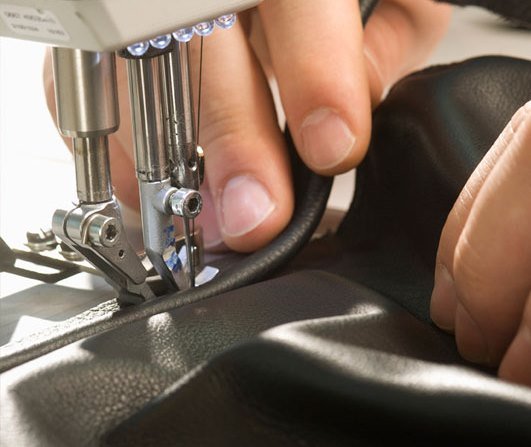
In the Lounge Chair Atelier on the Vitra Campus, here the individual production steps of Eames Chairs can be observed.